Tension Headaches: Understanding the Most Common Headache and How to Overcome It
Learn what tension headaches really are, what causes them, and how simple lifestyle changes and the right treatment can break the cycle of daily head pain.
Tension Headaches: Understanding the Most Common Headache and How to Overcome It
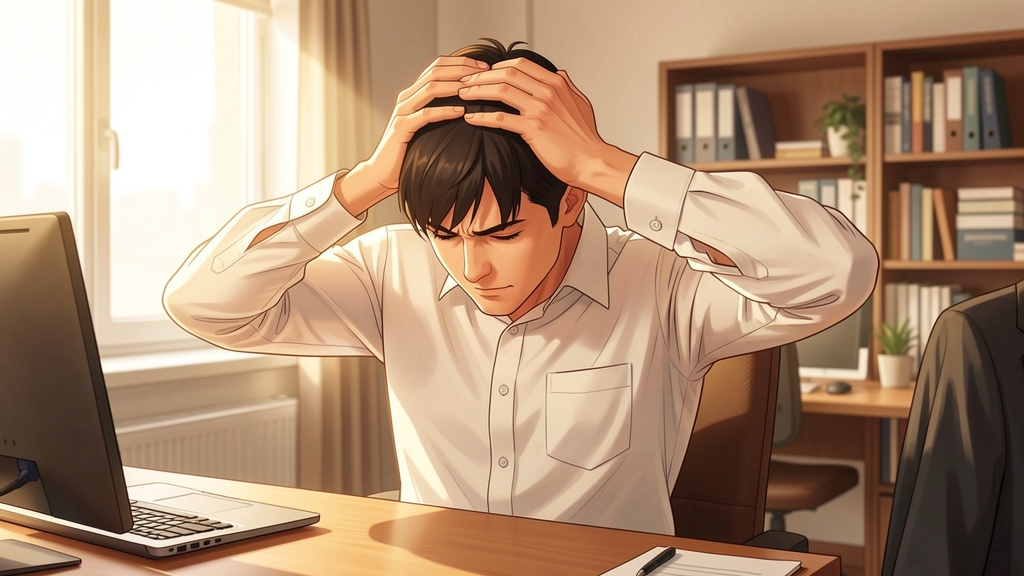
If you have ever ended a long day at a desk with a dull, pressing ache encircling your head, tighter across your forehead and heavier at the back, you have almost certainly experienced a tension-type headache. It is the most common headache type worldwide, affecting the majority of people at some point in their lives, and yet it is also one of the most mismanaged.
In my practice, patients with tension headaches come in for one of two reasons. Either the frequency has crept up to the point where it is disrupting their life, or, and this is more concerning, they have been taking over-the-counter painkillers so regularly that the medication itself has become part of the problem. Understanding tension headaches properly is the foundation for managing them well.
What Are Tension Headaches?
The pain of a tension headache is distinctive once you know what to look for:
- Bilateral: Felt on both sides of the head, across the forehead, the temples, the back of the head, or all three
- Pressing or tightening quality: Often described as a band or vice around the head, not throbbing
- Mild to moderate intensity: Unpleasant, but usually does not prevent activity
- Not worsened by physical activity: Unlike migraine, climbing stairs does not make it worse
- No nausea or vomiting (mild nausea possible occasionally, but not a feature)
- Duration: 30 minutes to several hours; sometimes days
Tension headaches are classified as episodic (fewer than 15 days per month) or chronic (15 or more days per month for more than three months). Chronic tension-type headache significantly affects quality of life and almost always has a medication overuse component if the patient has been self-medicating.
What Causes Tension Headaches?
The mechanisms are not fully understood, but the most important contributing factors I see in my patients:
Stress is the leading trigger, whether it is chronic occupational stress, relationship stress, or financial stress. The urban Indian working environment in particular, with its long commutes in Mumbai traffic, sedentary desk work, irregular meal times, and screen-heavy roles, creates a context where tension headaches are almost expected. I see this across all age groups, but particularly in professionals in their 30s and 40s.
Posture and muscle tension: hours at a desk with a forward-head posture or elevated, tense shoulders are among the most reliable causes of tension headache. The headache begins in the neck and shoulder muscles and refers pain upward.
Irregular sleep: both insufficient sleep and oversleeping on weekends can trigger attacks. The “weekend headache” that arrives after sleeping in is a classic presentation of this.
Dehydration and skipped meals: common in busy schedules, and easy to overlook as a trigger.
Eye strain: uncorrected refractive errors, reading in poor light, or excessive screen time without breaks all contribute.
Caffeine fluctuations: for regular tea or coffee drinkers, missing the usual morning intake is a reliable trigger.
Warning Signs to Take Seriously
Tension headaches are benign; they are not dangerous. However, some headache features require medical evaluation:
- Thunderclap onset: A headache that reaches maximum intensity within seconds is never typical of tension headache. Seek emergency care
- Fever with stiff neck: Possible meningitis, a medical emergency
- Headache after head injury: Even mild head trauma requires evaluation
- Progressive worsening: A headache that steadily worsens over days or weeks without relief needs investigation
- New headache after age 50: New-onset headache in older adults always warrants evaluation
- Headache with neurological symptoms: Weakness, vision changes, slurred speech, or confusion is an emergency
If your headaches fit the classic tension-type pattern and have been present for years, the above red flags are less likely to apply. But if the pattern changes, with headaches becoming more severe, more frequent, or developing new features, see a neurologist.
When to Seek Help
See your doctor or neurologist if:
- Headaches occur more than 10 to 15 days per month
- You are taking pain relief medication more than two or three times per week
- Headaches are affecting your work, sleep, or daily life
- Over-the-counter treatment is no longer working as well as it used to
That last point is especially important. Frequent painkiller use for headaches, even standard ones like paracetamol or ibuprofen, can cause medication overuse headache (rebound headache) if used more than 10 to 15 days per month. This is one of the main reasons episodic tension headache becomes chronic. A neurologist can help you safely reduce medication use while addressing the underlying pattern.
Management: What Actually Works
For episodic tension headaches, the most effective approach is addressing triggers rather than only treating pain:
- Stress management: Regular physical exercise, adequate sleep, mindfulness, and simple breathing techniques are all evidence-based for reducing tension headache frequency. Yoga, widely practised in India, has specific benefit for both stress and posture
- Posture correction: Adjust your workspace. Screen at eye level, chair at the right height, shoulders relaxed. Brief standing or stretching breaks every 45 to 60 minutes
- Regular meals and hydration: Do not skip breakfast. Keep water accessible at your desk. These are the simplest interventions, and patients are often surprised by the difference they make
- Sleep consistency: Wake up at the same time every day, including weekends. Sleeping in significantly on weekends is a reliable trigger
Physiotherapy targeting neck and shoulder muscles can be highly effective for tension headaches with a clear postural component.
Acute medication (used sparingly, not as a daily habit): Simple analgesics or NSAIDs can help manage individual attacks. The critical word is sparingly: use only when needed, not habitually.
For chronic tension headaches: Preventive treatment prescribed by a neurologist is often necessary. This involves daily medication (different from acute pain relief) taken for several months to break the chronic cycle. Please do not try to manage chronic daily headache alone.
Common Questions
1. How do I know if my headache is tension-type rather than migraine? The key distinguishing features: tension-type headache is typically bilateral (both sides), described as pressing or tightening rather than throbbing, mild to moderate in severity, and does not worsen with routine physical activity. It usually does not cause nausea or vomiting, and light/sound sensitivity, if present, is mild. Migraine tends to be one-sided, throbbing, moderate to severe, and often makes you want to stop what you are doing and rest. That said, the two conditions can coexist, and a neurologist can clarify the pattern.
2. Can posture really cause headaches? Yes, significantly. The head weighs approximately 5 kilograms. When the neck is in a neutral position, the spine supports it well. When the head is tilted forward, as it is during prolonged screen use, particularly on a phone, the effective load on the cervical spine increases dramatically. This sustained muscle tension feeds directly into the pattern of tension-type headache. I see this clearly in my practice, particularly in younger adults who use devices for many hours a day. Ergonomic correction is genuinely therapeutic.
3. I have a headache almost every day. Is that medication overuse? Possibly, if you are taking over-the-counter pain relief most days. Daily or near-daily headache that follows a pattern of frequent analgesic use is likely medication overuse headache, where the medication itself is perpetuating the cycle. The only way to break this is to reduce the medication (with guidance), which initially causes a worsening of headache before improvement. This should be done with specialist support, not alone.
4. Is cognitive behavioural therapy (CBT) really effective for tension headaches? Yes. There is good evidence that CBT reduces headache frequency in tension-type headache, particularly where psychological stress is a significant driver. It does not treat the acute pain, but it changes the stress response and the thinking patterns that amplify headache vulnerability. I refer patients to this regularly and find it valuable, often combined with physical therapy for the postural component.
A Personal Note
Tension headaches sit in an odd position in medicine. They are so common that people assume they are not worth treating properly, yet when they become chronic they can be as disabling as any other headache condition. I have patients who have had daily headaches for ten years and simply got used to functioning through the pain. When we address the pattern (the medication overuse, the postural issues, the sleep, the stress) and sometimes add preventive treatment, the change in their daily life is remarkable.
If headaches have become background noise in your life, that is not something you need to accept. Please come and talk to us.
This article is for educational purposes only and is not a substitute for professional medical advice. Please consult a qualified neurologist for the diagnosis and treatment of any neurological condition.
Need Professional Help?
If you or your loved one is experiencing neurological symptoms, don’t hesitate to reach out. Schedule a consultation with Dr. Natasha Tipnis Shah for expert care and guidance.
Book an AppointmentSchedule Your Consultation
Take the first step towards better neurological health. Book your appointment today.
Hospital Locations
Jaslok Hospital & Research Center
K.J. Somaiya Hospital & Research Center
Somaiya Ayurvihar, Eastern Express Hwy, Sion East, Sion, Mumbai, Maharashtra 400022
24 Hours
Zynova Shalby Hospital
CTS 1900-1917, Lal Bahadur Shastri Marg, Gandhi Nagar, Kirti Vihar, Ghatkopar West, Mumbai, Maharashtra 400086
24 Hours
Heart & Vascular Superspeciality Hospital
3rd Floor, Silver Point, Lal Bahadur Shastri Marg, Kasturi Park, Maneklal Estate, Ghatkopar West, Mumbai, Maharashtra 400086
24 Hours