Sinus Headaches: Why Most Are Actually Migraines in Disguise
Discover why most headaches labelled 'sinus headaches' are actually migraines, how to tell the difference, and when you genuinely need ENT care versus a neurologist.
Sinus Headaches: Why Most Are Actually Migraines in Disguise
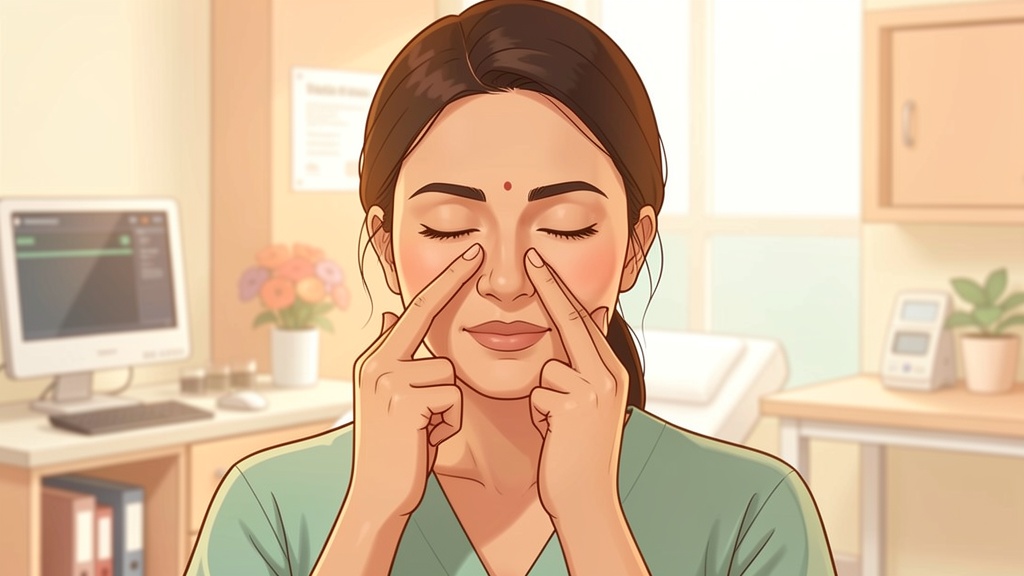
One of the most common conversations I have in my neurology clinic begins with a patient saying: “I’ve been getting sinus headaches for years.” They have had multiple ENT consultations, several rounds of antibiotics, perhaps a CT scan of their sinuses that showed nothing significant, and the headaches continue unchanged. This is a pattern I see repeatedly, and it reflects a widespread misconception about what a “sinus headache” actually is.
Research suggests that the majority of headaches that patients and doctors identify as “sinus headache” actually meet the diagnostic criteria for migraine. Understanding why this happens, and how to distinguish between a true sinusitis headache and a migraine, can save years of misdirected treatment.
What Is a True Sinus Headache?
A genuine headache caused by sinus disease (rhinosinusitis) occurs when the sinuses (air-filled spaces around the nose and eyes) become inflamed and infected. The key word here is infected. True sinus headache:
- Occurs as part of acute bacterial sinusitis: fever, thick coloured nasal discharge, and facial pressure or tenderness that worsens when you bend forward
- Is constant and dull, localised to the area over the infected sinus (forehead, cheeks, or behind the eyes)
- Improves with antibiotic treatment of the infection. If the headache does not respond to antibiotics, sinusitis is probably not the cause
- Is time-limited: it resolves when the infection resolves, usually within 7-14 days
- Is accompanied by other signs of infection: fever, malaise, reduced smell
If your “sinus headaches” recur monthly, come without clear infection, last for hours with nausea and sensitivity to light, or respond better to migraine treatment than to decongestants, they are very unlikely to be true sinus headaches.
Why Migraine Is So Often Mistaken for Sinus Headache
Migraine has several features that make it easy to confuse with sinus disease:
Nasal symptoms: Up to 45% of people with migraine experience nasal congestion, runny nose, or facial pressure during an attack. These are neurological symptoms caused by the trigeminal nerve, not sinus inflammation. The trigeminal nerve supplies both the sinuses and large areas of the face, so migraine activation through this pathway causes genuine nasal and facial symptoms.
Location: Migraine can cause pain around the eyes and across the forehead, exactly where sinus pain is expected.
Weather and pressure triggers: Many migraine sufferers find their headaches worsen with weather changes, barometric pressure drops, or seasonal changes. These are real triggers, but the mechanism is neurological, not sinus-related. Patients correctly identify the association with weather but attribute it to sinuses rather than their nervous system.
Timing: Migraines can be more frequent during allergy seasons, because nasal inflammation can be a trigger, but again, the headache itself is migraine, not sinusitis.
In my practice, I regularly see patients who have had years of antibiotic prescriptions and decongestant use that provided no lasting benefit, while a migraine preventive medication, or identifying and managing migraine triggers, makes a significant difference.
When Is It Really a Sinus Problem?
True sinusitis as a cause of recurrent headache is less common than widely believed, but it does exist and should not be dismissed. Genuine rhinosinusitis is more likely when:
- There is clear coloured nasal discharge with fever
- Headache responds to and resolves with antibiotic treatment
- CT or endoscopic findings confirm active sinus disease
- The headaches do not have migraine features (no throbbing, no nausea, no light or noise sensitivity, no aura)
Chronic rhinosinusitis (long-standing sinus inflammation) can contribute to headache, but in this case the headache is usually pressure-like, not the pulsating, disabling pain of migraine. If you have confirmed chronic sinusitis and headaches, both conditions may need treatment, but treating the sinuses alone will not resolve the migraine component.
Warning Signs That Require Urgent Evaluation
Most headaches in the forehead or around the eyes are benign, but seek urgent or emergency care if:
- Thunderclap headache: Maximum-intensity headache reaching its peak within seconds, possible subarachnoid haemorrhage, emergency
- Fever with severe headache and stiff neck: Possible meningitis, emergency
- Headache with visual changes, weakness, or confusion: Requires immediate neurological assessment
- Headache following head trauma: Even mild injury warrants evaluation
- Significant swelling around the eye accompanying headache and facial pain: Could indicate sinus infection spreading to the orbit, urgent ENT assessment
Getting the Right Diagnosis
If you have been told you have recurrent sinus headaches, the following questions are worth discussing with a doctor or neurologist:
- Do your headaches respond to antibiotics or only to pain relief?
- Do you experience nausea, light sensitivity, or sound sensitivity during attacks?
- Do the headaches throb or pulse?
- Do attacks last 4-72 hours?
- Do headaches worsen with physical activity?
If the answer to questions 2-5 is mostly yes, a migraine diagnosis should be seriously considered, even if the pain location feels “sinus-like.”
A diagnostic trial of migraine treatment, guided by a neurologist, can be more informative than repeated sinus imaging. Migraine responding to migraine treatment (rather than sinusitis responding to antibiotics) is itself a diagnostic finding.
Management: Matching Treatment to Diagnosis
If migraine is the correct diagnosis:
- Identifying and reducing triggers: irregular sleep, skipping meals, stress, weather sensitivity
- Acute migraine treatment prescribed by a neurologist
- Preventive medication if attacks are frequent
- Avoiding long-term painkiller overuse, which worsens the pattern
If true sinusitis is contributing:
- Appropriate antibiotic treatment for acute bacterial infections
- Saline nasal irrigation can reduce nasal congestion and is safe and non-pharmacological
- Avoiding triggers for allergic rhinitis if relevant (dust, mould, seasonal pollen)
- ENT review for structural issues if sinusitis is genuinely recurrent
In India specifically: air pollution in cities like Mumbai is a real trigger for both nasal inflammation and migraine. Air conditioning that is excessively cold or not properly maintained can also worsen nasal symptoms. These environmental factors are worth discussing.
Common Questions
1. My ENT has confirmed sinusitis, could the headache still be migraine? Yes. Sinusitis and migraine can coexist, and it is not uncommon to have both. Even with confirmed sinusitis, if you have headaches that occur outside sinusitis episodes, or headaches that have features of migraine (throbbing, light sensitivity, nausea), migraine should be assessed independently. Treating the sinus disease properly is important, but if headaches persist after the sinusitis is resolved, a neurological evaluation is worthwhile.
2. Can seasonal allergies cause headaches? Allergic rhinitis causes nasal congestion and inflammation which, when severe, can contribute to sinus pressure and headache. More importantly, there is a well-documented link between allergic conditions and migraine, as the inflammatory pathways overlap. If your headaches are clearly seasonal, a combination of allergy management and headache-specific treatment often achieves better results than treating either alone.
3. What is the 20-20-20 rule and does it help? The 20-20-20 rule (every 20 minutes, look at something 20 feet away for 20 seconds) is a screen hygiene guideline for reducing eye strain, which contributes to both tension-type and sinus-area headaches. It is helpful but insufficient on its own for frequent headaches; it is one tool among several, not a cure. Proper screen height, adequate ambient lighting, and regular full breaks are equally important.
4. Should I use nasal decongestant sprays regularly for sinus headache? Topical nasal decongestant sprays (oxymetazoline and similar) should not be used for more than three to five days consecutively. Prolonged use causes rhinitis medicamentosa, rebound nasal congestion that becomes worse than the original symptom. Saline rinses are safe to use regularly without this risk and are genuinely helpful for clearing nasal passages.
A Personal Note
In my years of practice, I have seen patients genuinely relieved to learn that their long-standing “sinus problem” is actually migraine, because migraine, properly treated, can be controlled. The frustration of repeated ENT treatments that did not work is replaced by a clearer path forward.
If you have been managing what you think are sinus headaches without lasting success, I would encourage you to see a neurologist for a thorough headache evaluation. Getting the right diagnosis is the most important first step.
This article is for educational purposes only and is not a substitute for professional medical advice. Please consult a qualified neurologist for the diagnosis and treatment of any neurological condition.
Need Professional Help?
If you or your loved one is experiencing neurological symptoms, don’t hesitate to reach out. Schedule a consultation with Dr. Natasha Tipnis Shah for expert care and guidance.
Book an AppointmentSchedule Your Consultation
Take the first step towards better neurological health. Book your appointment today.
Hospital Locations
Jaslok Hospital & Research Center
K.J. Somaiya Hospital & Research Center
Somaiya Ayurvihar, Eastern Express Hwy, Sion East, Sion, Mumbai, Maharashtra 400022
24 Hours
Zynova Shalby Hospital
CTS 1900-1917, Lal Bahadur Shastri Marg, Gandhi Nagar, Kirti Vihar, Ghatkopar West, Mumbai, Maharashtra 400086
24 Hours
Heart & Vascular Superspeciality Hospital
3rd Floor, Silver Point, Lal Bahadur Shastri Marg, Kasturi Park, Maneklal Estate, Ghatkopar West, Mumbai, Maharashtra 400086
24 Hours