Post-Traumatic Headaches: What Happens to Your Brain After a Head Injury
Why headaches are the most common symptom after concussion, what red flags demand emergency care, and how to recover well after a head injury.
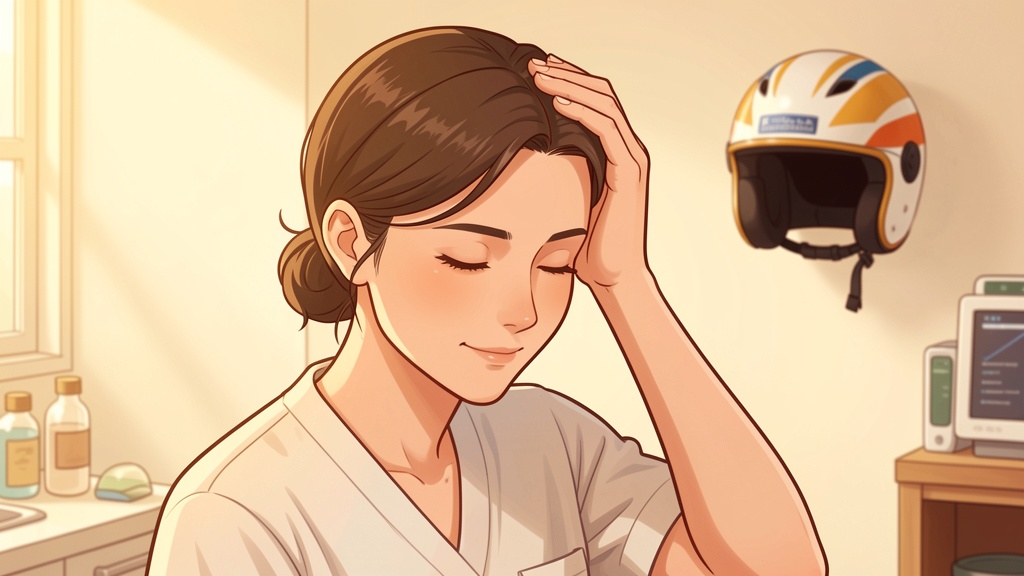
Post-Traumatic Headaches: What Happens to Your Brain After a Head Injury
In Mumbai’s traffic, head injuries happen more often than they should. A two-wheeler accident, a sudden stop in an auto-rickshaw, a fall from a ladder during a home renovation. I have seen all of these in my clinic, and in many cases, the person who arrives is not the one who was injured but their worried family member saying, “It was just a small bump. They don’t even have a cut. But they’ve had a headache every single day since.”
That phrase, “it was just a small bump,” is one I hear often, and it is something I want to address directly. There is no such thing as a trivial head injury when the brain is involved. The skull may be intact, there may be no visible wound, and a CT scan may show nothing alarming, but the brain is a delicate organ, and even a mild jolt can disrupt it in ways that take weeks or months to settle.
Understanding Post-Traumatic Headaches
Post-traumatic headache is the most common symptom following a concussion or mild traumatic brain injury. By definition, it begins within seven days of the head injury itself, or within seven days of regaining consciousness, if there was a period of unconsciousness.
What makes post-traumatic headache interesting from a clinical perspective is that it does not have a single, fixed character. It can present in different ways in different people. Some experience it as a pressure or tightness across the forehead and temples, similar to a tension-type headache. Others describe throbbing pain on one side, sensitivity to light and sound, and nausea, a pattern that closely resembles migraine. The character of the headache does not tell us precisely what happened inside the brain, but it does guide how we approach management.
The vast majority of post-traumatic headaches improve within three months of the injury. When headache continues beyond this point, it is termed persistent post-traumatic headache, and this is when specialist assessment becomes especially important. A smaller number of people go on to experience chronic headache that significantly affects their daily functioning, and these cases need careful, patient-centred management.
People who had a history of migraine before their injury may find that post-traumatic headache is more severe and takes longer to resolve. This is not unusual, and it is worth mentioning your prior headache history to your doctor after any head injury.
Red Flags: Emergency Symptoms After Head Injury
I want to be very direct here, because these symptoms represent medical emergencies and cannot wait.
Call emergency services immediately, do not wait, if after a head injury someone develops:
- A headache that is getting progressively worse, not better
- Repeated vomiting (more than once or twice)
- Confusion, difficulty recognising familiar people or places, or unusual behaviour
- Seizure (convulsion or jerking movements)
- Loss of consciousness, even briefly
- Weakness, numbness, or difficulty using one arm or leg
- Slurred speech or difficulty finding words
- Unequal pupils, one larger than the other
- Clear fluid from the nose or ears
These signs can indicate bleeding inside the skull or significant brain injury. The fact that the initial impact seemed minor does not rule this out. Bleeding within the skull can develop slowly over hours after a seemingly unremarkable injury, particularly in older adults or people on blood-thinning medications.
In my practice, I have seen families wait overnight hoping a loved one would “sleep it off” after a fall. Please do not do this. When in doubt, go to the emergency department.
When to See a Neurologist
Beyond the immediate emergency situations, a neurology review is warranted if:
- Headache persists beyond two to three weeks after the injury
- Headache is severe, or is clearly worsening rather than gradually improving
- You are experiencing cognitive symptoms alongside headache: difficulty concentrating, memory gaps, unusual fatigue, or mood changes (this cluster is sometimes called post-concussion syndrome)
- You have had multiple head injuries over time (a concern particularly for athletes, motorcyclists who have had accidents, or those in contact sports)
- Your headache has continued beyond three months after the injury
- You are struggling to return to work, school, or normal activities because of symptoms
Management: Recovery Takes Time, but It Happens
The most important thing I want to convey about post-traumatic headache is that recovery is real and it usually happens, but it requires patience and the right approach.
In the first days after a head injury, the brain needs rest. This means reduced screen time (phones, laptops, television), avoiding physically demanding activity, and prioritising sleep. This is not about keeping someone in a darkened room indefinitely. It is about a graduated, thoughtful return to normal activity, paced according to symptoms.
Graduated return to activity is now the recommended approach for mild traumatic brain injury. Rest aggressively for the first 24 to 48 hours, then slowly reintroduce cognitive and physical activity in a stepwise fashion, guided by symptoms. If headache worsens with an activity, scale back and try again more slowly. This approach, rather than prolonged complete rest, tends to produce better outcomes.
Acute pain management for the headache itself should be used carefully and under medical guidance. Over-reliance on pain medications after head injury creates its own complications (more on that in a separate article). Your doctor will help you find the right balance.
For persistent post-traumatic headache, the approach is more complex and individualised. Preventive treatment strategies (the specific options depending on the headache pattern and individual health profile) may be appropriate. Physical therapy, vestibular rehabilitation if there is associated dizziness, and psychological support for the emotional impact of injury all have a role. Consult your neurologist for a plan tailored to you.
Practical Tips for Recovery
- After any significant head injury, have someone stay with you for the first 24 hours and wake you periodically overnight to check you are responding normally
- Do not return to driving, operating machinery, or contact sports until your doctor has cleared you
- Wear a helmet every time you ride a two-wheeler, bicycle, or scooter. This cannot be overstated in the Mumbai context, where two-wheeler accidents are one of the leading causes of traumatic brain injury in India
- Seat belts save lives in car accidents and also reduce the severity of head injury. Use them, in every seat, every journey
- Keep a symptom diary during recovery: note headache severity, triggers (screen time, noise, exertion), and how you sleep. This guides your doctor
- Tell your employer or school about the injury; a temporary adjustment in demands during recovery is reasonable and protects long-term recovery
Common Questions
1. I only had a mild concussion, why is my headache still going on weeks later? Severity of initial injury does not reliably predict the duration of post-traumatic headache. Some people with mild concussion develop persistent symptoms; some with more significant initial injuries recover faster. The brain’s response to trauma is complex and individual. “Mild” concussion is a misleading term: it refers to the neurological grading of the injury, not the potential duration of symptoms. If your headache persists beyond four weeks, seek neurological evaluation rather than continuing to wait.
2. My child had a head injury at school, when is it safe to return to sport? Return to sport after concussion must follow a stepwise graduated return protocol, not a time-based rule. The child should be symptom-free at rest before beginning the protocol, then progress through stages of increasing exertion, spending at least 24 hours at each stage without symptoms. A second concussion during recovery, while the brain is still vulnerable, can cause disproportionate damage. Your doctor or a sports medicine physician should guide this process. School sporting organisations typically have protocols for this.
3. Could my persistent headache after the injury be due to something structural? If a headache after head injury is severe, worsening over days, or accompanied by vomiting, confusion, or neurological symptoms, it needs imaging to exclude intracranial haematoma (bleeding between the brain and skull). In a straightforward mild concussion with a consistent post-concussive headache that is not changing character, imaging is often normal, because the injury is functional not structural. Your doctor will advise whether imaging is indicated based on the clinical picture.
4. What if I cannot afford to rest from work after the injury? I understand this is a real constraint in many Indian households, and I say this carefully: reduced activity during the early recovery phase is a medical recommendation, not a preference. Even partial reduction, whether lighter duties, shorter hours, or reduced screen time, helps more than no modification at all. Returning too quickly extends the recovery period and increases the risk of persistent symptoms, ultimately costing more time. If you explain the situation to an employer, many will allow some reasonable adjustment.
A Personal Note
There is a tendency in India, and I say this with understanding rather than criticism, to push through. To rest for a day and then get back to work, back to school, back to managing the household, because life does not pause. I have seen this delay recovery significantly. The brain is not like a sprained ankle where you can limp along and it slowly heals around your activity. It needs a genuine rest period, and rushing that phase often makes the persistent phase far more difficult.
If you or someone in your family has had a head injury, take it seriously. Seek assessment. Follow the graduated recovery plan. And please, wear your helmet.
This article is for educational purposes only and is not a substitute for professional medical advice. Please consult a qualified neurologist for the diagnosis and treatment of any neurological condition.
Need Professional Help?
If you or your loved one is experiencing neurological symptoms, don’t hesitate to reach out. Schedule a consultation with Dr. Natasha Tipnis Shah for expert care and guidance.
Book an AppointmentSchedule Your Consultation
Take the first step towards better neurological health. Book your appointment today.
Hospital Locations
Jaslok Hospital & Research Center
K.J. Somaiya Hospital & Research Center
Somaiya Ayurvihar, Eastern Express Hwy, Sion East, Sion, Mumbai, Maharashtra 400022
24 Hours
Zynova Shalby Hospital
CTS 1900-1917, Lal Bahadur Shastri Marg, Gandhi Nagar, Kirti Vihar, Ghatkopar West, Mumbai, Maharashtra 400086
24 Hours
Heart & Vascular Superspeciality Hospital
3rd Floor, Silver Point, Lal Bahadur Shastri Marg, Kasturi Park, Maneklal Estate, Ghatkopar West, Mumbai, Maharashtra 400086
24 Hours