Medication Overuse Headache: When the Cure Becomes the Cause
How taking headache medication too often can create a cycle of daily headaches, and how to break it safely with guidance from your neurologist.
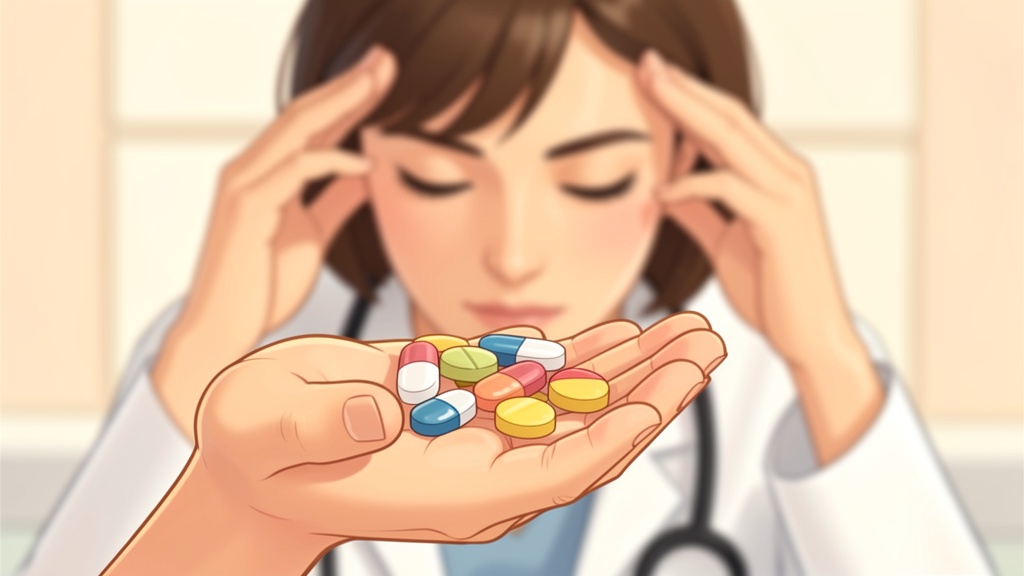
Medication Overuse Headache: When the Cure Becomes the Cause
There is a particular kind of consultation I find myself having regularly, and it goes something like this: a patient comes in with daily or near-daily headaches that have been building up over months or years. They have been managing with whatever is available from the chemist: sometimes paracetamol, sometimes a combination tablet with caffeine, sometimes something stronger. The medication gives temporary relief, but the headache keeps returning, and over time they need the medication more often to get through the day. By the time they reach my clinic, they may be taking pain relief almost every day, and their headaches are worse than they have ever been.
What I then have to explain, carefully, because it can be a difficult thing to hear, is that the very medication they have been relying on to manage their headaches has become a significant part of the problem.
This is medication overuse headache, sometimes called rebound headache, and it is one of the most common and most treatable causes of chronic daily headache.
Understanding Medication Overuse Headache
The mechanism works like this: when acute headache medications are taken frequently over a prolonged period, the brain adapts to their presence. Pain-modulating pathways in the nervous system change in response to the regular medication use. When the medication wears off, these adapted pathways generate a new headache, which then drives the person to take more medication, which provides brief relief, which then wears off, causing another headache. The cycle becomes self-sustaining.
The key thresholds are specific. Simple analgesics (paracetamol, anti-inflammatory medications like ibuprofen or aspirin) can cause medication overuse headache when taken on fifteen or more days per month. Triptans (medications specifically designed for migraine), as well as opioid-containing medications, can cause it at a lower frequency: ten or more days per month. Combination analgesic tablets, the kind that often contain paracetamol together with caffeine or other compounds, many of which are easily available over the counter in India, carry a particularly high risk.
Almost any medication used to treat acute headache can contribute to this problem if used too frequently. It does not discriminate between prescription and over-the-counter options.
What is important to understand is that medication overuse headache cannot occur in isolation. It develops on a background of an underlying primary headache condition, most commonly migraine or tension-type headache. The person was already prone to headaches; the frequent medication use transforms an episodic problem into a chronic daily one.
The Particular Challenge in India
I want to address something that is especially relevant in our context. In India, a wide range of analgesic combinations are available over the counter, without a prescription. The chemist around the corner is often the first, and sometimes the only, point of contact for someone with headaches. A tablet is dispensed, it helps, another is taken next time, and gradually the pattern escalates without anyone stepping back to look at the bigger picture.
This is not a failing of individual patients. It reflects a system where specialist care is not always accessible, where the cost of a consultation feels prohibitive compared to the cost of a tablet, and where the cultural norm is to manage quietly rather than seek help. I understand these realities. But I also see the consequences, and I want people to understand that what begins as a practical short-term solution can create a much more difficult long-term problem.
Warning Signs That This May Apply to You
Consider seeking a specialist review if:
- You are taking headache medication on more than two or three days per week, most weeks
- You find that medication provides shorter and shorter periods of relief over time
- Your headaches have shifted from occasional to near-daily or daily
- You feel the need to take medication in anticipation of a headache, or as soon as you wake up
- You notice that your headaches have changed in character, perhaps previously having clear migraine features, but now feeling more constant and lower-grade
- Stopping your usual medication even briefly causes a marked worsening of headache
Seek emergency care if your headaches are accompanied by fever and stiff neck, sudden severe onset (thunderclap), neurological symptoms such as weakness or vision changes, or if the pattern is dramatically different from anything you have experienced before. These are not features of medication overuse headache and need immediate assessment.
Management: There Is a Way Through
I want to be honest: breaking the medication overuse cycle is not comfortable. When the overused medication is stopped, headaches typically worsen before they improve. This is the expected withdrawal phase, and knowing it is coming, and that it is temporary, makes it more bearable.
This is also precisely why I urge you not to attempt this alone or abruptly. Please work with your neurologist on a structured withdrawal plan. The approach will be tailored to which medication you have been overusing, how long this has been occurring, your overall health, and your personal circumstances. A planned, supervised withdrawal is both safer and more likely to succeed than a sudden self-managed attempt.
Alongside withdrawal from the overused medication, your neurologist will address the underlying headache condition, because that is what allowed the cycle to develop in the first place. For many people, this means starting a preventive treatment strategy: medications taken regularly not to treat an attack when it happens, but to reduce the frequency and severity of attacks so that acute treatment is needed less often. There are several effective preventive options; which is appropriate depends on your individual profile.
Behavioural approaches also matter significantly. Regular sleep, consistent meal times, physical activity, and stress management are not optional lifestyle add-ons. They are core components of headache management that reduce the reliance on acute medication.
Practical Steps
- Count your medication days: keep a headache diary for four weeks and honestly record every time you take any pain relief for a headache; the number often surprises people
- Bring this diary to your neurologist; it is the single most useful piece of information for planning your care
- Do not stockpile or routinely carry tablets as a “just in case”; if the medication is always immediately to hand, it is harder to resist taking it at the first hint of a headache
- If you currently manage your headaches primarily through over-the-counter tablets purchased at the pharmacy, make an appointment to see a neurologist. A proper diagnosis and preventive plan will serve you far better in the long term
- Tell your family what you are working on; their support during the withdrawal phase, when headaches temporarily worsen, makes a real difference
Common Questions
1. How do I know if I have medication overuse headache? The key signal: you are taking over-the-counter or prescription pain relief for headache on ten or more days per month, every month, and yet the headaches are not improving or are getting worse over time. Often there is a daily background headache with episodic worsening, and the only thing that relieves the background headache is more medication. If this describes your pattern, please seek neurological evaluation.
2. Which medications are most likely to cause rebound headache? Triptans and opioid-containing medications can cause overuse headache with as few as ten days of use per month. Simple analgesics (paracetamol, ibuprofen, aspirin) require more frequent use (fifteen or more days per month) before causing overuse headache. Combination medications, those containing caffeine, codeine, or barbiturates, carry the highest risk and the most difficult withdrawal. Be especially cautious with any combination headache tablet from the pharmacy.
3. Can I stop the overuse medication gradually rather than all at once? The evidence generally favours stopping overuse medication completely rather than gradually, because a gradual reduction prolongs the withdrawal phase without proportionately reducing its severity. However, abrupt withdrawal of certain medications, particularly opioid-containing tablets or barbiturate combinations, requires medical supervision and should not be done alone. A neurologist can guide the appropriate withdrawal strategy for your specific medication.
4. My headaches get much worse when I try to stop: is this normal? Yes, and expected. The withdrawal phase, typically lasting 7 to 14 days, involves a significant worsening of headache before improvement. This is the brain recalibrating without the regular analgesic signal it has come to depend on. Knowing this in advance, and having support during this phase, makes it more bearable. Many patients describe the period after successful withdrawal as a marked improvement in their overall headache burden.
A Personal Note
In my practice, I have seen the medication overuse cycle cause enormous suffering, not because patients were careless, but because they were doing their best with the information they had. Reaching for a tablet when your head is pounding is a completely rational response. No one takes pain relief thinking they are creating a problem; they are trying to function.
What I want people to take away from this is not guilt, but possibility. Medication overuse headache is highly treatable. Many of my patients who have gone through the withdrawal process and established proper preventive management describe a transformation in their quality of life: fewer headache days, better sleep, the ability to plan their lives around something other than their next headache.
You deserve care that treats the whole problem, not just the immediate symptom. That care is available. Please ask for it.
This article is for educational purposes only and is not a substitute for professional medical advice. Please consult a qualified neurologist for the diagnosis and treatment of any neurological condition.
Need Professional Help?
If you or your loved one is experiencing neurological symptoms, don’t hesitate to reach out. Schedule a consultation with Dr. Natasha Tipnis Shah for expert care and guidance.
Book an AppointmentSchedule Your Consultation
Take the first step towards better neurological health. Book your appointment today.
Hospital Locations
Jaslok Hospital & Research Center
K.J. Somaiya Hospital & Research Center
Somaiya Ayurvihar, Eastern Express Hwy, Sion East, Sion, Mumbai, Maharashtra 400022
24 Hours
Zynova Shalby Hospital
CTS 1900-1917, Lal Bahadur Shastri Marg, Gandhi Nagar, Kirti Vihar, Ghatkopar West, Mumbai, Maharashtra 400086
24 Hours
Heart & Vascular Superspeciality Hospital
3rd Floor, Silver Point, Lal Bahadur Shastri Marg, Kasturi Park, Maneklal Estate, Ghatkopar West, Mumbai, Maharashtra 400086
24 Hours