Headache Prevention and Lifestyle Changes
Discover effective strategies and lifestyle changes to prevent headaches. Learn how daily habits, environment, and self-care can reduce headache frequency and improve quality of life.
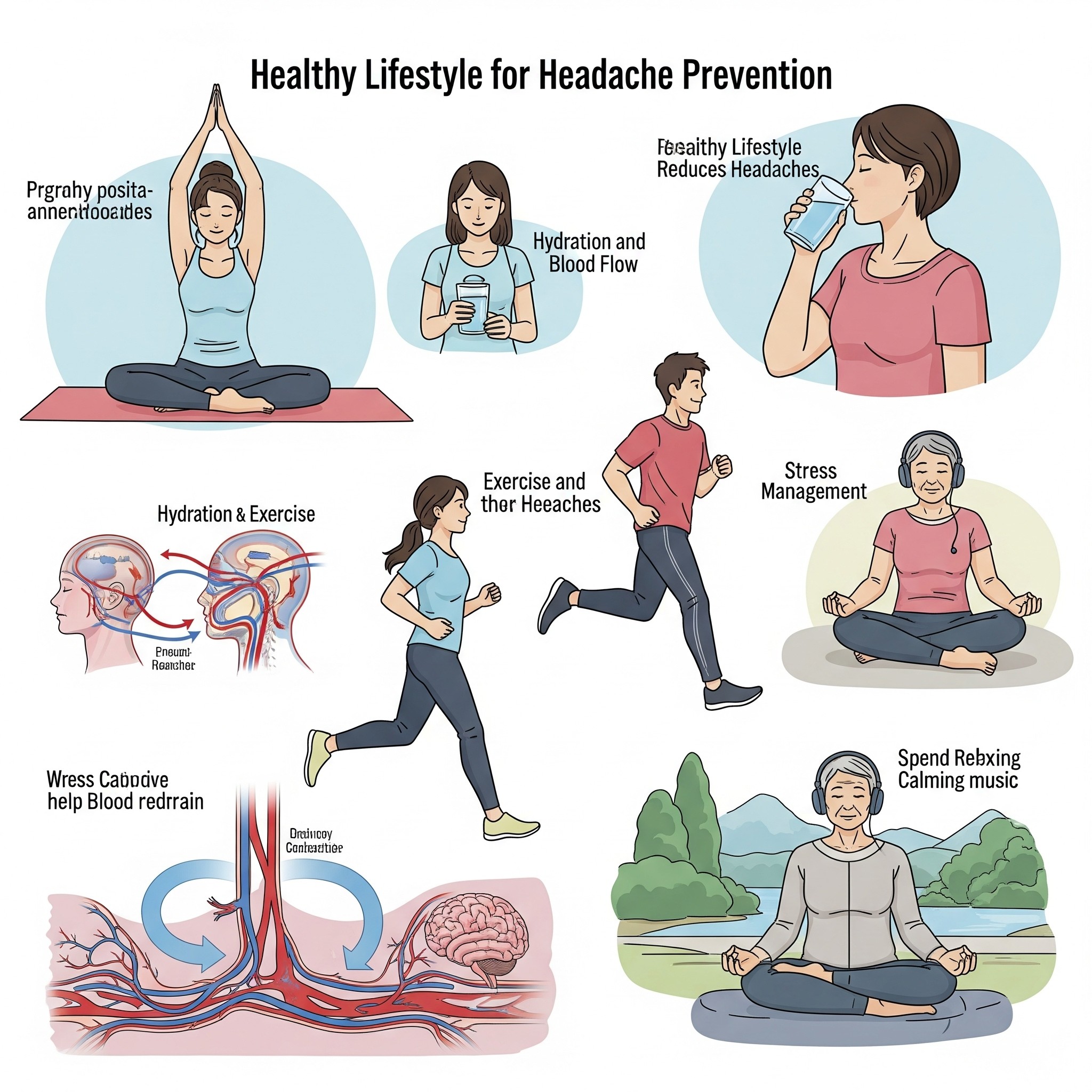
Headache Prevention and Lifestyle Changes
As a neurologist practicing in both the UK and India, I have seen how small changes in daily habits can make a big difference in preventing headaches. Through my work with patients and organizations like SAMMAN, I’ve learned that prevention is often the best medicine.
Why Prevention Matters
Many headaches can be avoided or reduced in frequency and severity by understanding and addressing their triggers. Prevention empowers you to take control of your health and minimize disruptions to your daily life.
Common Headache Triggers
Based on my clinical experience, these are some of the most common triggers. Stress consistently tops the list, yet it is also the most underestimated. Patients are often surprised when I tell them that something as routine as skipping Sunday breakfast or sleeping in two extra hours can trigger a “weekend headache.” Consistency, it turns out, is one of the most powerful prevention tools we have.
- Stress and anxiety
- Irregular sleep patterns
- Dehydration
- Skipping meals
- Caffeine overuse or withdrawal
- Poor posture
- Eye strain
- Hormonal changes
- Environmental factors (noise, bright lights, strong smells)
Lifestyle Changes for Prevention
1. Manage Stress Effectively
In my practice, one pattern I encounter repeatedly is the “delayed stress headache”: a patient who holds it together through a high-pressure work deadline, then develops a debilitating migraine the moment the project ends. The nervous system is not always linear. Teaching my patients to manage stress proactively, rather than waiting to decompress afterwards, has made a meaningful difference for many of them.
- Practice relaxation techniques such as deep breathing, meditation, or yoga
- Take regular breaks during work or study
- Set realistic goals and prioritize tasks
2. Maintain a Regular Sleep Schedule
The weekend headache is one of the most common, and most preventable, presentations I see. Sleeping three hours later on Saturday and Sunday disrupts the body clock in ways that reliably trigger migraine in susceptible individuals. I ask my patients to aim for no more than one hour variation between weekday and weekend wake times, even if it feels like a sacrifice. For most of them, it is the single most effective change they make.
- Go to bed and wake up at the same time every day
- Create a calming bedtime routine
- Avoid screens and caffeine before bedtime
3. Stay Hydrated
- Drink plenty of water throughout the day
- Limit sugary and caffeinated drinks
4. Eat Balanced Meals
- Don’t skip meals; eat at regular intervals
- Include fruits, vegetables, whole grains, and lean proteins
- Avoid trigger foods if you notice a pattern (e.g., aged cheese, processed meats)
5. Exercise Regularly
- Aim for at least 30 minutes of moderate activity most days
- Choose activities you enjoy, such as walking, swimming, or cycling
- Exercise can reduce stress and improve sleep
6. Practice Good Posture
This has become an increasingly significant trigger over the past decade, and I attribute much of it to how we now use devices. I regularly see patients, particularly in their twenties and thirties, with chronic tension headaches that trace directly to phone use: head tilted forward, shoulders rounded, sometimes for four to six hours a day across work and leisure. A simple observation: raising your phone to eye level, rather than dropping your head to look at it, removes a meaningful amount of strain from the muscles that feed directly into headache.
- Set up an ergonomic workspace
- Take breaks to stretch if sitting for long periods
- Be mindful of your posture while using devices
7. Limit Caffeine and Alcohol
- Monitor your intake and avoid overuse
- Gradually reduce if you suspect they are triggers
8. Protect Your Eyes
- Take regular breaks from screens (20-20-20 rule)
- Use proper lighting
- Get regular eye check-ups
9. Track Your Headaches
- Keep a headache diary to identify patterns and triggers
- Share this information with your healthcare provider
In my practice, I’ve found that patients who keep a headache diary for even two weeks start to see patterns they never noticed before: a particular food, a missed meal, or a night of poor sleep appearing consistently in the days before an attack. That moment of recognition is often the turning point.
Environmental and Cultural Considerations
- Minimize exposure to loud noises and strong smells
- Use sunglasses or hats in bright sunlight
- Be aware of cultural practices or traditional remedies that may help or hinder prevention
When to Seek Help
If you continue to have frequent or severe headaches despite making lifestyle changes, consult a healthcare professional. Some headaches may require medical evaluation and treatment.
Doctor’s Perspective: Real Patient Stories
Through my work with patients at my Mumbai clinic, I’ve seen how small, consistent changes create real turning points. One patient, a busy professional in her thirties, had been managing migraines for years with medication alone. When she began tracking her headaches, she discovered that every attack followed a night of fewer than six hours of sleep. Adjusting her schedule reduced her attacks by more than half within a month. Another patient found that fifteen minutes of yoga each morning addressed both her stress and her posture, two of her key triggers, more effectively than anything else she had tried. These stories remind me why prevention is always worth the conversation.
Take Action Today
- Identify your personal headache triggers
- Start with one or two lifestyle changes
- Track your progress in a headache diary
- Reach out for support if needed
Common Questions
- Can lifestyle changes really prevent headaches? Yes, for many people, simple changes can significantly reduce headache frequency and severity.
- How long does it take to see results? Some people notice improvement within weeks, while others may take longer. Consistency is key.
- Should I stop all caffeine? Not necessarily. Moderation is important. If you suspect caffeine is a trigger, reduce gradually.
- What if lifestyle changes don’t help? Consult a doctor to rule out underlying conditions and discuss other treatment options.
A Message of Hope
With the right knowledge and daily habits, you can take control of your headaches. Prevention is a journey, and every small step counts. Remember, you’re not alone: support and guidance are available to help you live headache-free.
This article is for educational purposes only and is not a substitute for professional medical advice. Please consult a qualified neurologist for the diagnosis and treatment of any neurological condition.
Need Professional Help?
If you or your loved one is experiencing neurological symptoms, don’t hesitate to reach out. Schedule a consultation with Dr. Natasha Tipnis Shah for expert care and guidance.
Book an AppointmentSchedule Your Consultation
Take the first step towards better neurological health. Book your appointment today.
Hospital Locations
Jaslok Hospital & Research Center
K.J. Somaiya Hospital & Research Center
Somaiya Ayurvihar, Eastern Express Hwy, Sion East, Sion, Mumbai, Maharashtra 400022
24 Hours
Zynova Shalby Hospital
CTS 1900-1917, Lal Bahadur Shastri Marg, Gandhi Nagar, Kirti Vihar, Ghatkopar West, Mumbai, Maharashtra 400086
24 Hours
Heart & Vascular Superspeciality Hospital
3rd Floor, Silver Point, Lal Bahadur Shastri Marg, Kasturi Park, Maneklal Estate, Ghatkopar West, Mumbai, Maharashtra 400086
24 Hours